
There’s this moment every semester where a student looks at their calendar and realizes three papers are due the same week. It happened to Sarah Chen at UC Berkeley during her junior year. Two research papers and a literature review, all while working part-time at the campus bookstore. She didn’t plan poorly. The syllabi just lined up that way. That’s when students start Googling phrases they never thought they’d search.
The academic writing assistance industry exists because college isn’t always designed for real life. Classes don’t coordinate deadlines. Professors don’t know you’re working 20 hours a week to pay rent. International students are writing complex arguments in their second or third language. And sometimes, honestly, you just need help.
What These Services Actually Do
A college essay writing service isn’t one thing. Some companies connect students with tutors who review drafts and suggest improvements. Others provide model papers that students can reference. Then there are platforms where you submit assignment details and receive a custom-written paper based on your specifications.
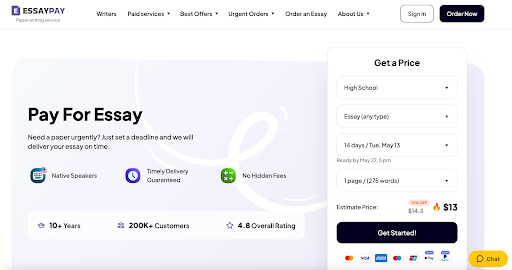
EssayPay falls into that last category. Students create an account, describe what they need (topic, length, academic level, deadline), and writers bid on the job or get assigned. The service handles everything from matching to delivery. Payment happens upfront or in milestones depending on how complex the order is.
The process sounds simple until you start asking practical questions. How much does it actually cost? What if the paper isn’t good? Can professors tell? These are the things students really want to know when they’re searching for an EssayPay review at 2am.
The Money Question
Pricing varies wildly across the industry. A basic five-page essay might run anywhere from $50 to $200 depending on the deadline and academic level. Rush orders cost more. Graduate-level work costs more. Specialized topics in engineering or nursing cost more.
Here’s what influences the final price:
- Deadline pressure: 24-hour turnaround versus two weeks makes a huge difference
- Academic complexity: High school essay versus PhD dissertation proposal
- Page count: Obviously, but also how much research is required
- Writer qualifications: Some platforms let you pay extra for writers with advanced degrees
Most services use a calculator tool where students input these variables and get a quote. It’s not cheap. A semester of regular orders could easily run into thousands of dollars, which is why most students use these services selectively, not habitually.
Quality Control Is the Real Issue
The biggest anxiety students have isn’t getting caught. It’s paying money and receiving garbage. A poorly written paper is worse than no paper because now you’re stressed and broke.
Quality depends entirely on the writer assigned to your order. Some platforms employ people with legitimate academic backgrounds. Others hire whoever applies and can string sentences together. The difference shows up immediately in the final product.
Custom essay help should theoretically mean work tailored to your instructions. In reality, sometimes writers don’t read carefully. They miss requirements. They use sources you didn’t want or ignore ones you specifically requested. Revision policies exist for this reason, but that assumes you have time to request revisions before your deadline.
Students who’ve used multiple essay services for students say the consistency matters more than one great experience. If you order three times and two are excellent while one is unusable, that’s a problem. You can’t risk your GPA on inconsistency.
What the Academic Integrity Office Would Say
Universities have strict policies about this stuff. Submitting someone else’s work as your own violates academic integrity codes at pretty much every institution. Stanford, MIT, University of Michigan…all have similar language in their student handbooks. Getting caught can mean failing the course or even suspension.
But enforcement is complicated. Professors can’t definitively prove you didn’t write something unless they catch you mid-act or you confess. Plagiarism detection software checks if text appears elsewhere online, not whether you personally wrote it. A custom-written paper created specifically for you won’t trigger those systems.
Still, experienced instructors sometimes spot inconsistencies. If your writing style suddenly changes dramatically, that raises questions. If the vocabulary doesn’t match your previous work, that’s suspicious. Smart students who use these services edit the final product to match their own voice before submitting.
Alternatives Worth Considering
Before spending money on a college essay writing service, most students don’t realize how much free help exists. Writing centers on campus employ trained tutors who review drafts for free. They won’t write your paper, but they’ll help you organize thoughts and improve arguments.
Office hours are underused. Professors actually want to help. Bringing a rough draft to office hours and asking specific questions gives you personalized feedback without any ethical gray area.
Study groups work for some people. Finding two or three classmates to share research sources and brainstorm thesis statements cuts down individual workload. Everyone still writes their own paper but the preliminary work gets distributed.
The problem is time. All these alternatives require having a draft to work with, which means starting early. When deadlines collide and you’re out of time, that’s when students feel they have no choice but to outsource.
The Honest Truth About Using These Services
No one wants to need academic writing assistance. It’s not something students brag about or discuss openly with friends. There’s shame attached to it, even when the circumstances feel legitimately overwhelming.
Some students use these services once in a genuine emergency and never again. Others become repeat customers because the first experience went smoothly and solving problems with money becomes a habit. There’s probably a third group who order something, receive poor quality, and decide the risk isn’t worth it.
The industry exists because it fills a gap. Whether that gap should exist is a different conversation about how universities structure coursework, support students with jobs and families, and accommodate diverse learning needs. But right now, today, thousands of students are searching for information about these platforms.
Knowing what you’re getting into matters. Understanding the costs, risks, and alternatives helps students make informed decisions rather than desperate ones. That’s really what anyone researching these services needs: clear information without judgment or sales pitches.